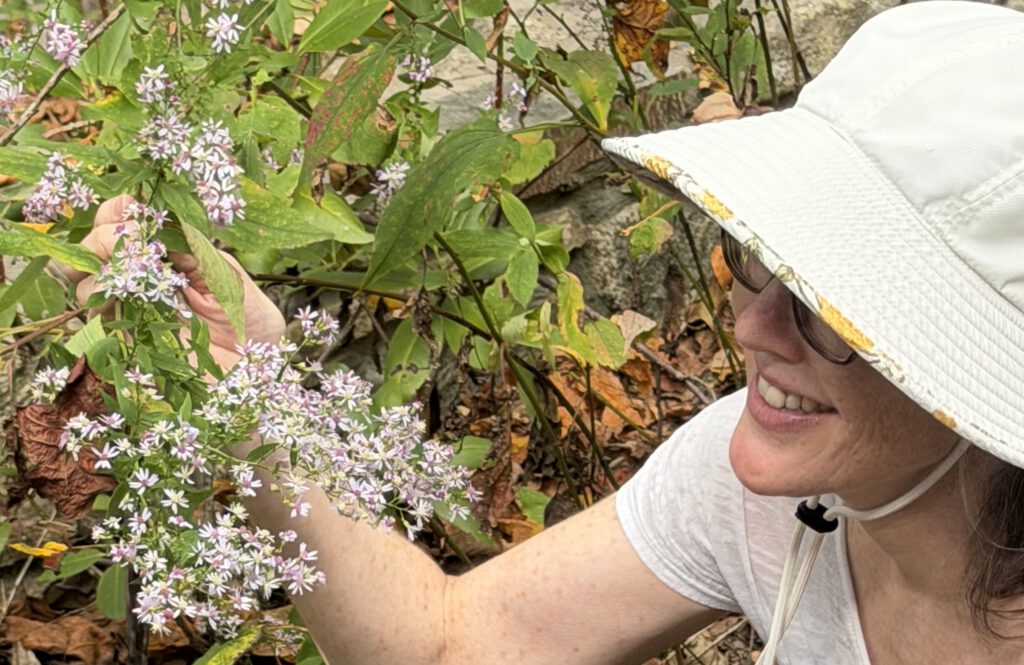
I have always loved plants and harbored a soft spot for wildlife. An only child born decades before personal computers and the internet, I spent hours in the back garden playing with next door’s cat whenever he visited and watching birds flit from hedge to tree and back again.
For most of my life, though, I have lived in subdivisions or concrete jungles. The first time I had outdoor space of my own was in my thirties. My husband and I bought a four-hundred square foot apartment with two window boxes. In my forties, we upgraded to an apartment with a deck. But it wasn’t until my fifties when we unexpectedly moved to Western North Carolina that I found myself with a proper yard where I could put plants in the ground and have enough sun to plant whatever I wanted. It even came with a few acres of forest.
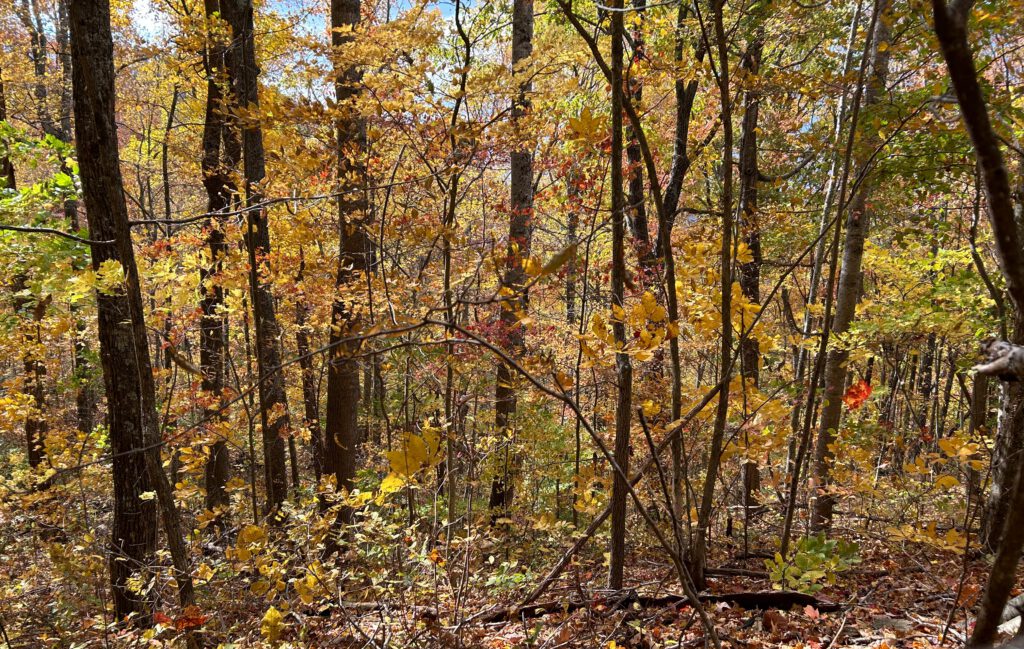
Sitting in that forest, I watched all sorts of animals: deer, chipmunks, bears, pileated woodpeckers, squirrels, and the list grew. The abundance of wildlife was intense, and it became clear: I was living in their home, not the other way around.
I also learned the distinctions between native, non-native, and invasive plants. And upon discovering how harmful invasive plants can be, I began my quest to remove them. The infestations were profound. I spent hours only to clear several square feet. But it felt right. So I kept going.
Four seasons out, and I estimate our little section of forest to be ninety percent native, and the non-native ten percent that’s left are little shoots. The cleared section of our backyard is probably still fifty-fifty native volunteers and non-native grasses and plants. I am not going to give up, though. I want to see what happens when a plot of land goes back to what it was before non-native plants arrived. It’ll never be exactly like it was, because invasive critters like spiders and worms are far more difficult to eradicate. But I want to get it as close as I can.
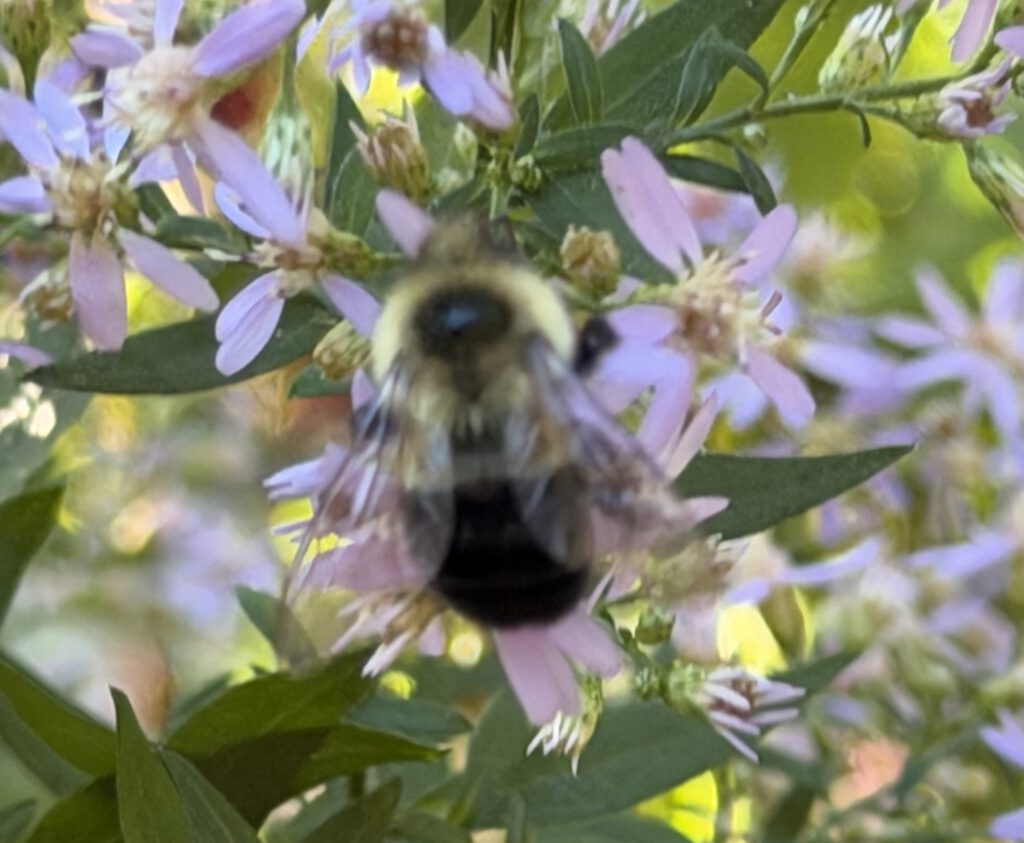
In the process of my little experiment, I realized the immense satisfaction and delightful surprises that result when one simply removes what isn’t supposed to be there and preserves what is. But it goes against our accepted approach to gardening. Most of us look at our outdoor spaces, plan out our desired aesthetic, smother or remove whatever doesn’t fit in with our plan, amend the soil so our desired plants can thrive, plant those plants, water, and watch our creativity unfold.
But then all that needs to be maintained. Whatever stubbornly continues to sprout but doesn’t fit in with our plan has to be removed. Soil has to continue to be fed. Water still needs to be sprayed. Plants need to be cut back. Conversely, when nature does the planting, none of that is necessary. All the maintaining is done for us. For free.
In case there are others like me out there who don’t necessarily have the greenest of thumbs but who want to create habitat for wildlife, I decided to share what I have learned. So, welcome to my little website. Not the most sophisticated perhaps, but hopefully helpful.
If you have any thoughts or questions, please reach out. I’m still learning but we might all get further by learning together.