Often Overlooked
Pollinator Magnets
Sometimes the best plants for pollinators are the ones that come up on their own. Here are three seldom-recommended volunteer plants that pollinators seem to adore:
No. 1: Field thistle (Cirsium discolor)
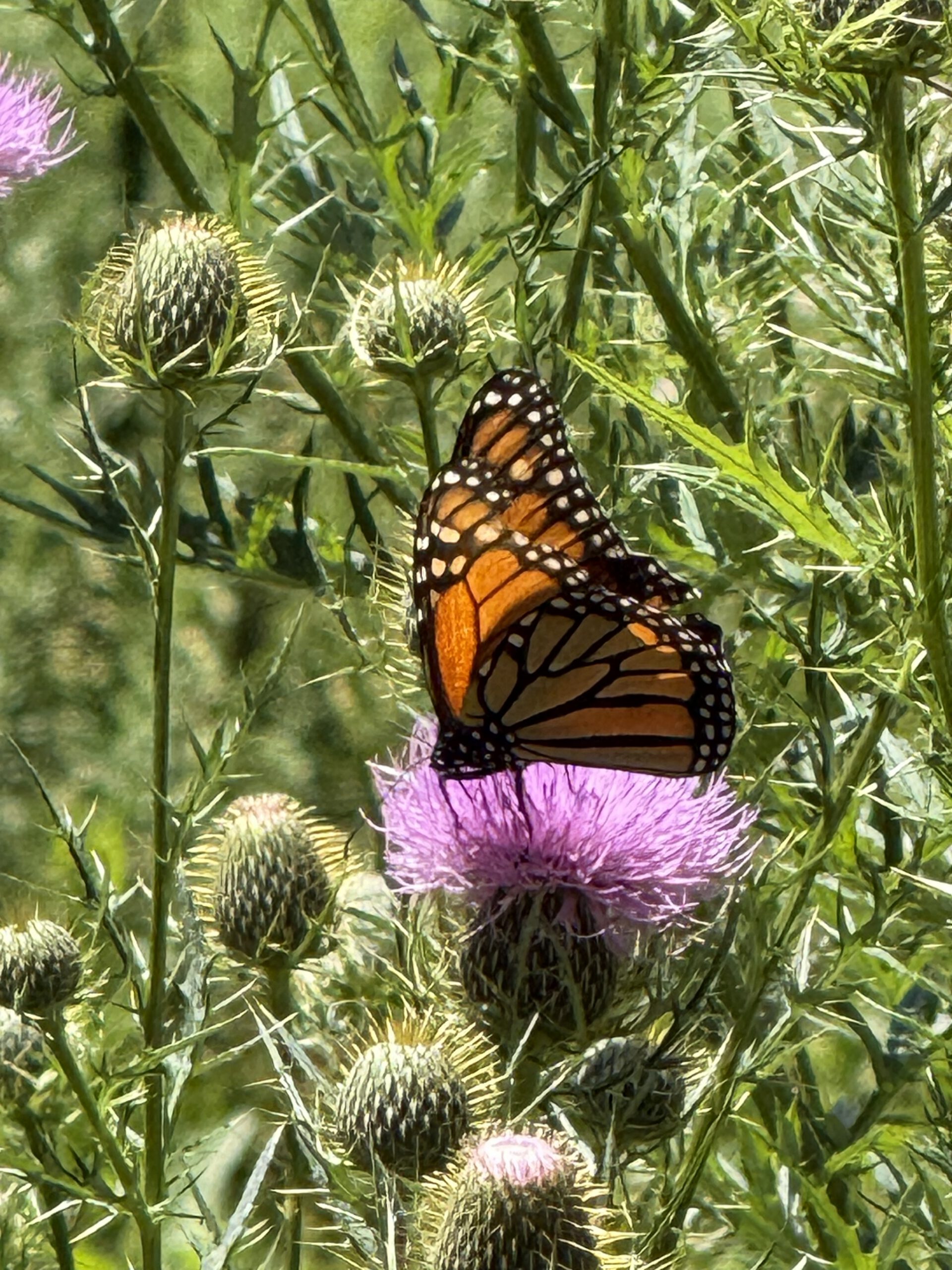
This past summer, by our patio, a plant materialized that we hadn’t seen before. It grew very tall. And looked super weedy.
“Is that a plant we have to keep?” my husband asked.
I could tell he hoped this wouldn’t be an American burnweed situation where I deemed a tall yet visually unimpressive plant a vital one that had to stay.
To his disappointment, the answer was yes. My research confirmed that this newcomer was indeed native to our region: field thistle (Cirsium discolor).
So we let it grow. And grow. And grow. In the end it reached over ten feet. We could watch it from an upstairs window. Looking closely we realized there were actually five of them growing together to form almost a tree-like appearance.
Eventually, the thistles bloomed. And then the entertainment arrived. An endless stream of butterflies, moths, bees, and other insects. A goldfinch couple came to gather bedding for their nest and then seeds for their young. A hummingbird visited multiple times daily. Before then, I hadn’t known a plant could attract so many visitors.
Now that the blooms are spent, we can only hope that hidden underneath all that growth are other thistle plants readying to bloom next year.
No. 2: Carolina horsenettle (Solanum carolinense)
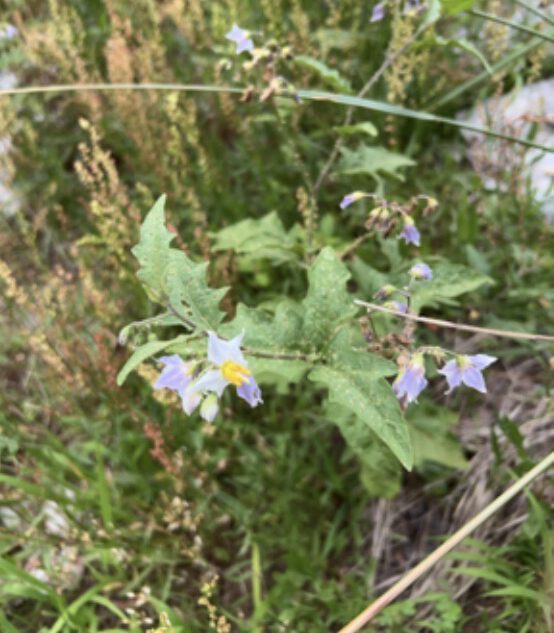
One afternoon during our first summer in Western North Carolina, I was in the midst of battling army after army of non-native bittersweet and becoming quite down about our seemingly never-ending invasive situation when I heard a loud buzzing. I followed the noise and came upon a plant teeming with bees. Virtually every flower had a bee by it.
I consulted my plant identification app: Carolina horsenettle (Solanum carolinense), a prickly native plant in the nightshade family. While not a plant for human (or possibly pet) consumption, it sure is a welcome sight for native bees.
No. 3: Jewelweed (Impatiens capensis & Impatiens pallida)
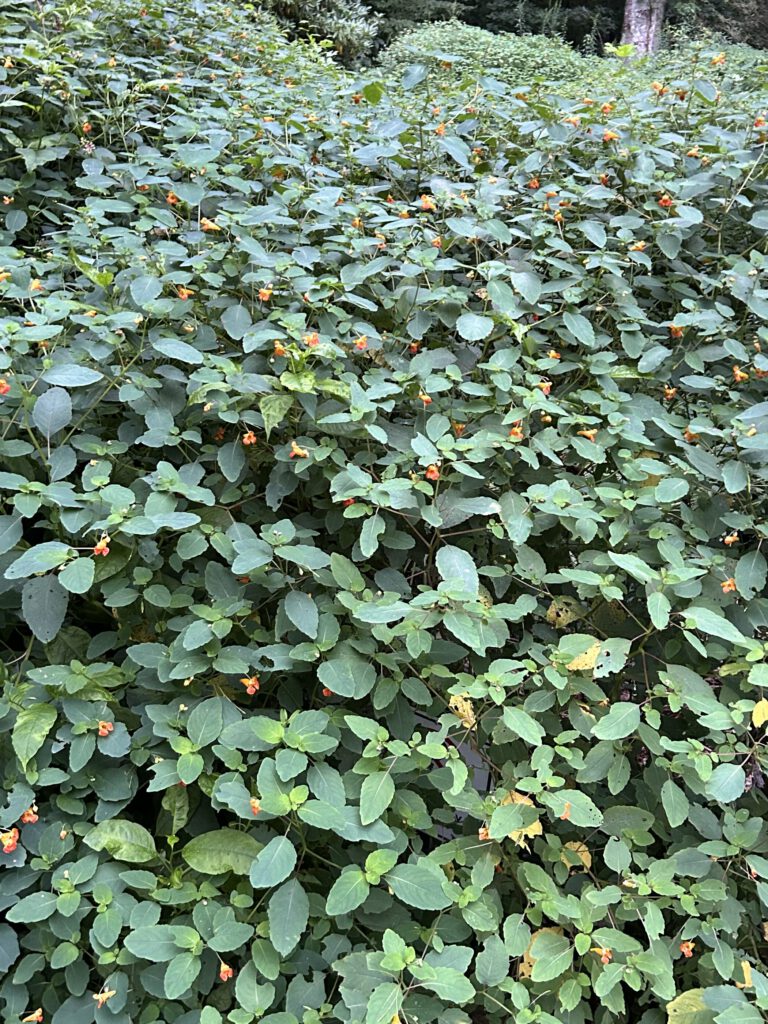
For the past three seasons where our predecessors had put down a carpet of wood chips, a monoculture of jewelweed (Impatiens capensis) has volunteered and covered the area. A second cluster of pale jewelweed (Impatiens pallida) has surrounded our mailbox. Growing close together, the colonies form dense seas of green.
When I first saw the flowers that materialized, they looked too small and insignificant to be of much use. But it didn’t take long for the wildlife to prove me wrong. Bees flocked to the little blossoms squeezing themselves into each bell-shaped flower as if it had been made specifically for them.
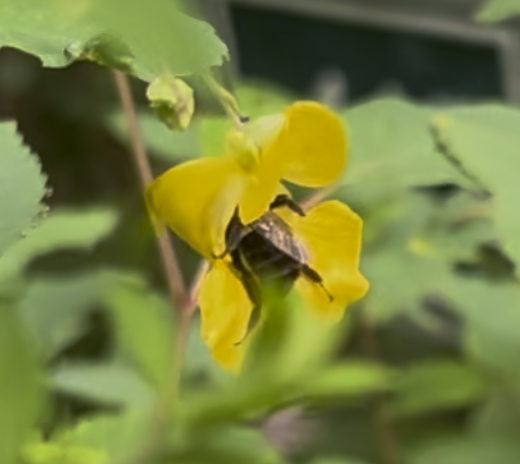
And then hummingbirds came daily. What looks unassuming and irrelevant to humans often does not match the wildlife’s assessment.
If you live in another part of the country (or world), the volunteer pollinator magnets for your particular ecosystem will likely be different. Pay attention to those so-called weeds that pop up voluntarily. If they’re native to your locale, let them grow. Watch who comes. You might find yourself creating a haven for pollinators, and for other wildlife. All for free. And with little to no effort on your part.