A Newer Invader: The Joro Spider
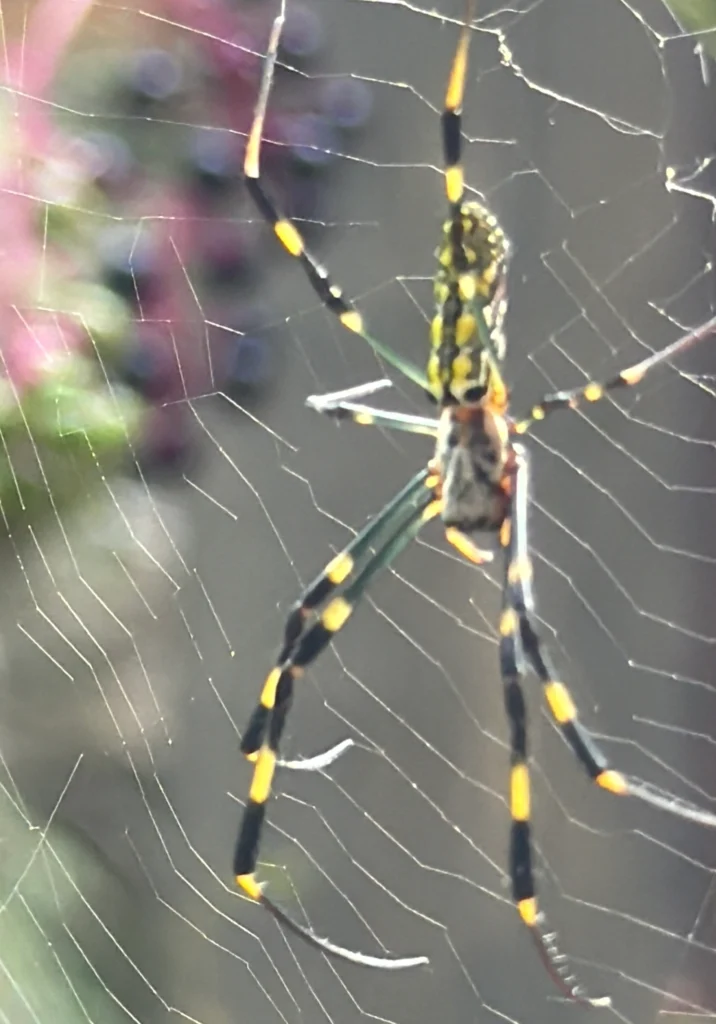
Walking down our driveway one afternoon, I happened to look up when the sun caught the largest, most convoluted spider’s web I had ever seen. It came in two parts — a traditional circular disc-like web inside a mass of three-dimensional chaos. The spider herself was huge as well.
Had all my efforts to turn our property into a mostly native sanctuary paid off by allowing a rare spider to take up residence?
No. What I was looking at was a Joro spider, an Asian orb weaver whose ancestors are thought to have arrived in the U.S. for the first time about a decade ago. Wanting to learn more, I turned to the internet.
Apparently, that time frame is too short for enough research to have been conducted to show whether this newcomer is a friend to our ecosystem or a foe. People who live in areas that have housed them the longest, though, warn of this spider’s proliferation and its seeming replacement of our native orb weaver spiders.
Stink bugs came to mind. The Asian brown marmorated stink bug is everywhere, and I have yet to find a native stink bug. Would our native orb weaver spiders suffer the same demise?
Logically, it seemed they might. All that giant sticky web takes up air space that is now not available to our native orb weavers and catches prey that our native orb weavers now cannot access.
I really don’t like killing anything. But just as I have found peace with killing invasive plants, this is one spider I will bat down and, for lack of a more delicate word, crush.
Of course, identification is key. Some of our native spiders spin messy, three-dimensional webs. So if you come across an untidy web, make sure it’s a Joro spider’s. I knocked one down once only to discover I had unhoused a native labyrinth orb weaver. Now, I only disrupt a web if I see a Joro spider actually in it.
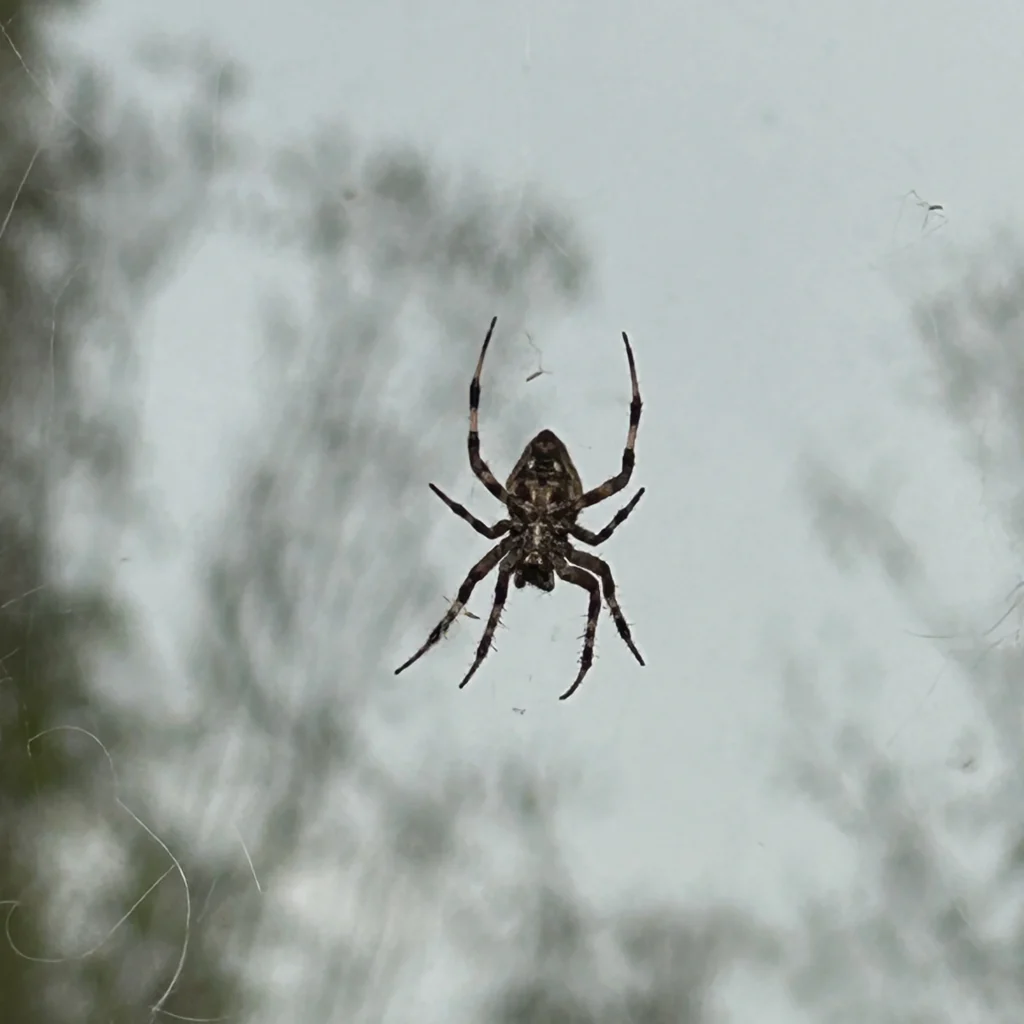
P.S. The Joro spider in the first photo is female. Male Joro spiders are smaller and all black (or dark brown), but still have abnormally long legs compared to their body size.