Snakes as Neighbors
For most of my life, I have had little to no direct contact with snakes. But shortly after moving to the southern Appalachian Mountains, I discovered that we shared our backyard with a very long black rat snake, who I soon learned was a good one to have around. They pose no threat to humans, and they keep rodent populations in check.
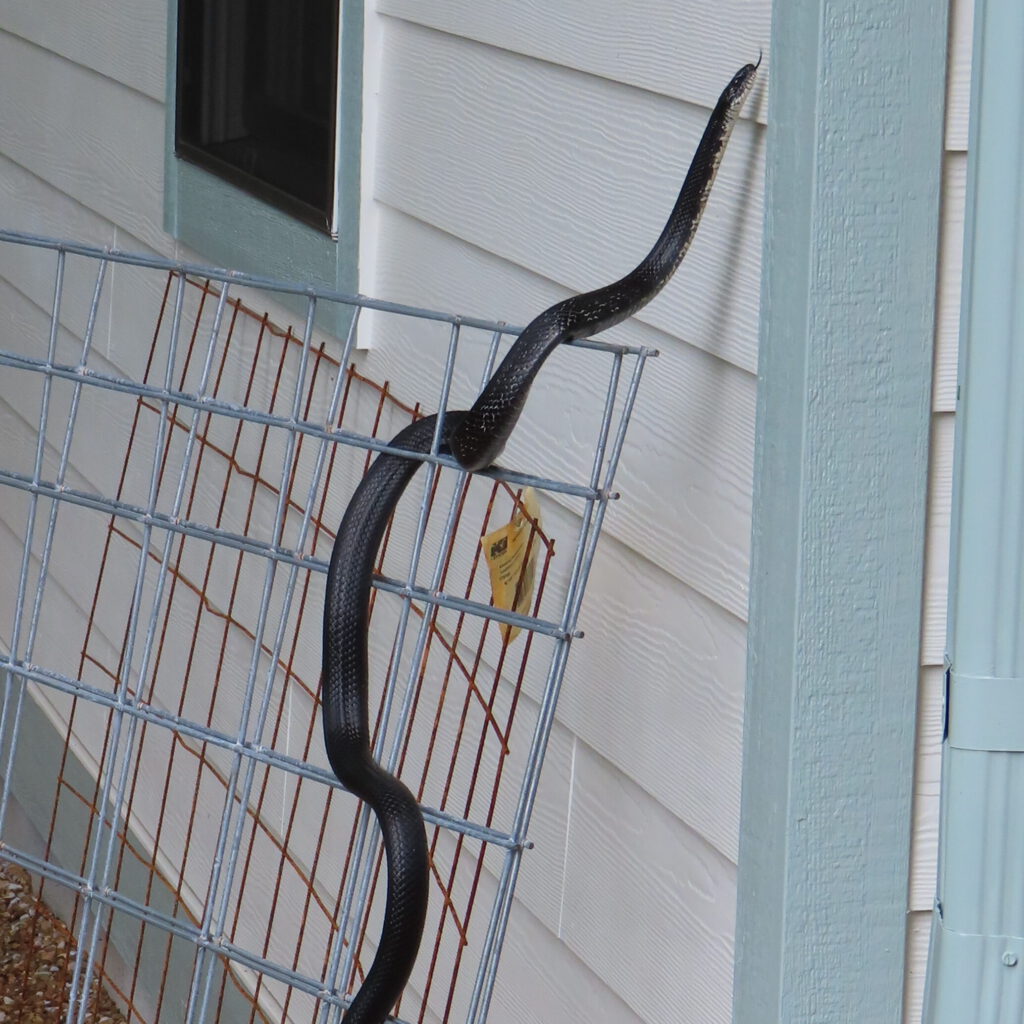
I watched this snake’s acrobatics in awe. Our indoor cat showed great interest, too:
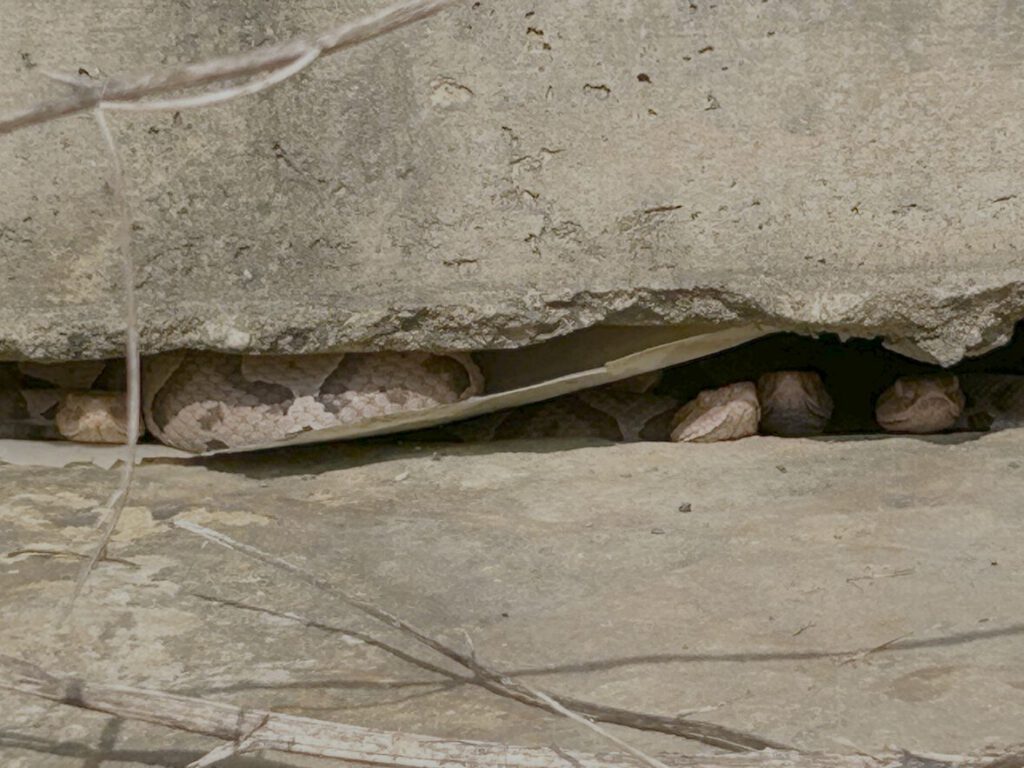
So when the steps running through our backyard settled creating a gap between the patio and the top step and another snake, sometimes two, took up residence in that crevice, I did the same thing: Marveled at them but left them alone.
I stepped over them. I bent down to study them. It seemed hardly possible that they were dangerous. They were so docile. Simply hanging out in their crack.
Sometimes they wouldn’t be there, but I never saw them outside their chosen home, and they never seemed bothered by my presence or anyone else’s. From the small amount of markings I could see, I concluded they were harmless milk snakes. So life continued.
Until this past summer, when there were suddenly four heads where there had been one or two. And one of them came out.
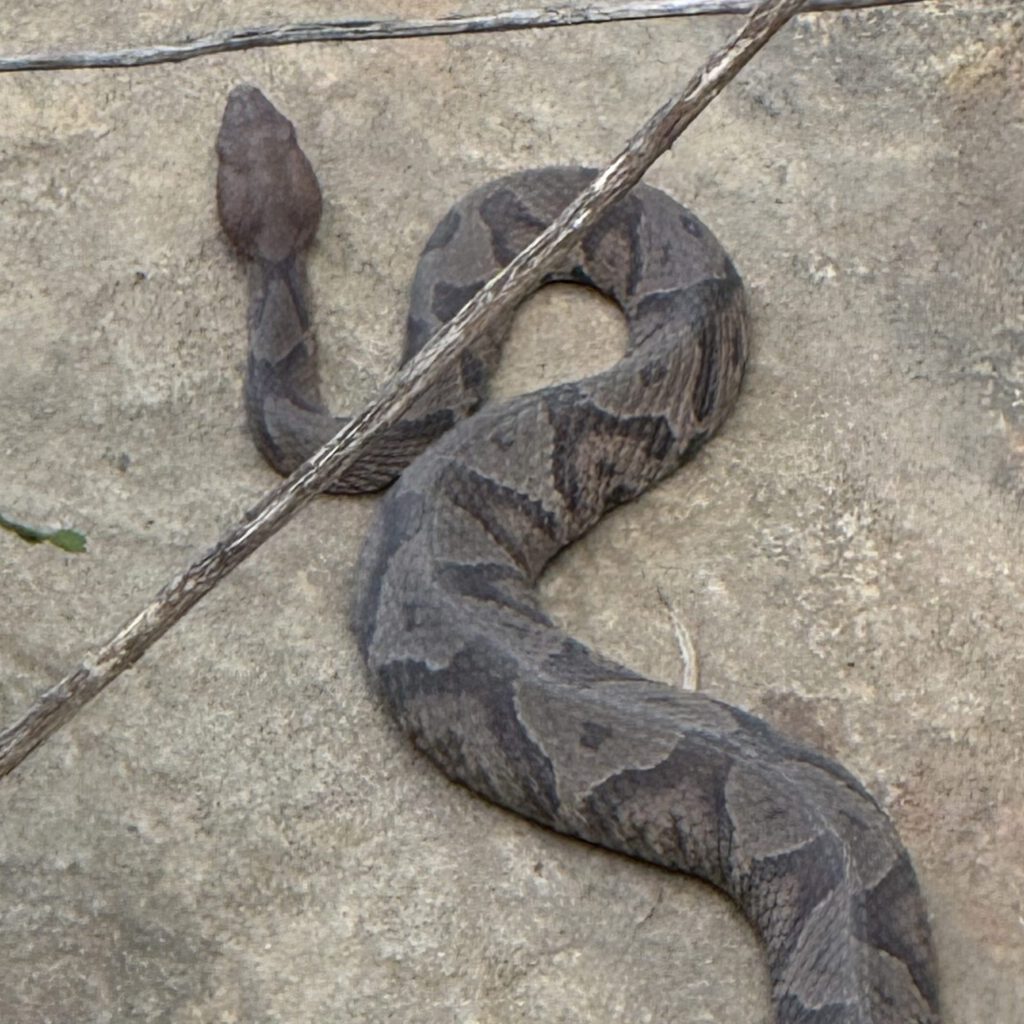
They were Eastern copperheads. Feared by many. And yet, my experience had been far less threatening. Countless times, I had walked past them. Several times, I had stopped to take photos and videos. Not once had they even really moved let alone fought back.
I did some research. They are indeed venomous and if bitten, a human would likely need immediate medical attention, but humans are not their prey. We’re too big. They don’t want to eat us. They likely don’t want to bother with us at all.
Yes, they’ll bite in self-defense, but if they don’t feel a need to defend themselves, they’ll leave us alone.
Admittedly, now that I know they’re venomous, I am a bit more cautious. I take bigger steps over them. If I can, I’ll avoid going that way.
But it is possible to co-exist with any kind of snake. It’s all about respect. Respect them, and they’ll see no need to attack. When walking in tall grass or other areas where it’s difficult to see the ground, tread slowly and carefully. Give them plenty of warning that you’re there, and they’ll slither out of your way.
If you encounter one face to face, and they do seem threatened or bothered, simply turn around and walk in the opposite direction.
So try not to proactively chase away snakes or remove them. They are a vital part of our ecosystem. They provide food for larger predators up the food chain. And they keep rodent populations in check so fewer critters will venture inside your home and there’ll be fewer hosts for tick-borne diseases.
Besides, aren’t they sweet?